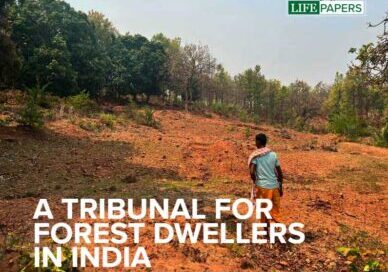

India’s forest dwelling communities, presently numbering nearly 200 million, have, since colonial times, lived a life of uncertainty. Considered as ‘rank encroachers’ on forest land, their lives depended on the whims and fancies of the forest department and other government agencies. In recent decades, the activities of private business entities increasingly decide the fate of forest dependent communities. Their position did not change much post-independence: the forest dwellers were evicted in the interest of the ‘larger common good’, when forest lands were diverted for mega dams, mines, industries and expanding urban spaces. Even when forests were to be protected in the interest of conservation; it was the forest dwellers who were seen as the greatest threat to the existence of forest and wildlife. Thus, forest dwellers were victims of twin policies: policies for the destruction of forests and policies for the conservation of forests. Even when they lived in forests, as legitimate land holders, the regulatory framework ensured that they were denied basic human necessities – electricity, education, roads and medical facilities. It is no coincidence, that despite being in areas which are rich in natural resources, forest dwellers are part of the lowest economic strata of society. With no land rights and livelihood security, forest dwellers are often left with no option but to migrate to urban centres to work as menial labourers in hazardous occupations.